The Structural Roadmap: Moving from High IQ Intelligence to Genius-Level Synthesis
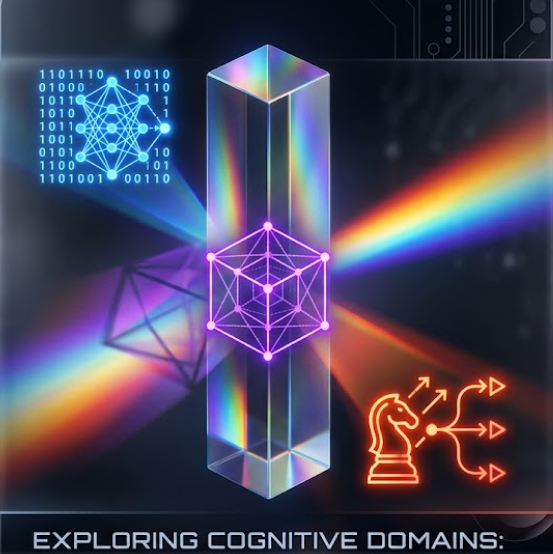
Being classified as "smart" usually signifies possessing a strong working memory, rapid information retrieval skills, and impressive analytical speed within well-defined, pre-established rules. Smart individuals excel in standardized environments because they absorb existing frameworks efficiently and execute solutions reliably. However, transitioning from high baseline intelligence (IQ 115–125) to true "genius-level" cognitive synthesis (IQ 135+) requires a fundamental shift in how the brain processes, deconstructs, and recombines information. Genius is not merely faster thinking; it is a structural evolution from passive rule-following to active framework creation.
Phase 1: Transitioning from Rule-Following to First Principles Thinking
The first critical barrier in moving beyond traditional smartness is overcoming reliance on analogies and pre-packaged formulas. Smart individuals solve problems by searching their memory banks for similar past experiences—a process known as reasoning by analogy. While efficient for routine tasks, this method fails when confronting unprecedented, complex challenges.
Genius-level synthesis requires adopting First Principles Thinking. Popularized by historical polymaths and modern innovators, this method involves stripping a problem down to its most basic, non-negotiable physical or logical truths and building a brand-new solution from the ground up. By deconstructing assumptions, you eliminate domain bias and unlock cross-disciplinary breakthroughs.
Phase 2: Mastering Mental Models and Cognitive Frameworks
To accelerate high-level problem solving, high-performing minds construct a mental library of multidisciplinary models. Rather than relying on a single specialized skill set, a genius-tier thinker draws tools from physics, economics, mathematics, and game theory to analyze a single scenario.
- Inversion Principle: Instead of focusing solely on how to achieve success, rigorously analyze how to guarantee failure, then systematically eliminate those vectors.
- Second-Order Thinking: Evaluate not just the immediate consequences of a decision, but the secondary and tertiary ripple effects over extended timelines.
- Pareto & Power Law Optimization: Identify the vital 2% of cognitive inputs or structural leverage points that dictate 80% of systemic outcomes.
- Probabilistic Reasoning: Replace binary "yes/no" predictions with nuanced Bayesian probability distributions to navigate uncertain environments.
Phase 3: Systematic Progression Matrix
The transition from baseline intellect to high-tier synthesis can be tracked across distinct operational milestones:
| Cognitive Tier | Operational Mindset | Primary Mental Framework | Problem-Solving Approach |
|---|---|---|---|
| Smart (IQ 115–125) | Optimizes within existing rules | Deductive Logic & Memory Retrieval | Analogy-based execution |
| Advanced (IQ 126–134) | Identifies hidden structural patterns | Inductive Logic & Mental Models | Multi-variate pattern matching |
| Genius Tier (IQ 135+) | Constructs original frameworks | First Principles & Abstraction | Nonlinear synthesis & rule creation |
Phase 4: Developing Inductive Speed and Pattern Recognition
Cognitive agility hinges on the neural speed at which your brain recognizes subtle, non-obvious patterns across numerical, spatial, and logical datasets. Training through structured matrix reasoning and situational logic puzzles sharpens the prefrontal cortex. As working memory efficiency improves, the cognitive load required to process novel information drops significantly, allowing your brain to process complex systems intuitively.
Phase 5: High-Stakes Situational Logic and Stress Resilience
Raw intellectual capacity drops drastically when exposed to environmental stress, tight deadlines, or emotional fatigue. True genius requires maintaining elite cognitive performance under pressure. Developing psychological resilience through timed logical challenges, strategic game-theoretic assessments, and controlled decision-making exercises ensures that your analytical precision remains sharp when stakes are high.
Phase 6: Continuous Neural Adaptation (Neuroplasticity)
The adult brain retains neuroplasticity—the ability to rewire neural pathways in response to deliberate practice. Transitioning to higher levels of cognitive ability demands persistent exposure to uncomfortable, non-routine mental challenges. Engaging daily with dynamic logic environments prevents cognitive stagnation and continually expands your problem-solving threshold.